Reviving the Rasas of the Soul in Today’s Classrooms
In the sacred soil of Bharat, education was never a dry transaction of facts — it was a transmission of tattva (essence), anubhava (experience), and samskara (values). The Rishis of yore, the gurus of our Gurukuls, understood that to raise a child was to sculpt a soul. And just as no sculpture is complete without both chisel and touch, no learning is whole without emotion and empathy.
Today, in our hyper-distracted, performance-driven schooling systems, we have inadvertently reduced learning to cognition alone. Children may master formulas and timelines, yet remain strangers to their own inner worlds — unable to name what they feel, express what they need, or navigate life’s inevitable tides of change. Amidst this growing emotional vacuum, it becomes imperative to ask:
How do we teach our children to feel deeply, relate compassionately, and respond resiliently? The answer lies in a timeless, transformative practice that our civilization has long revered — Drama and Theatre.
Natya — The Theatre of Emotions and Empathy
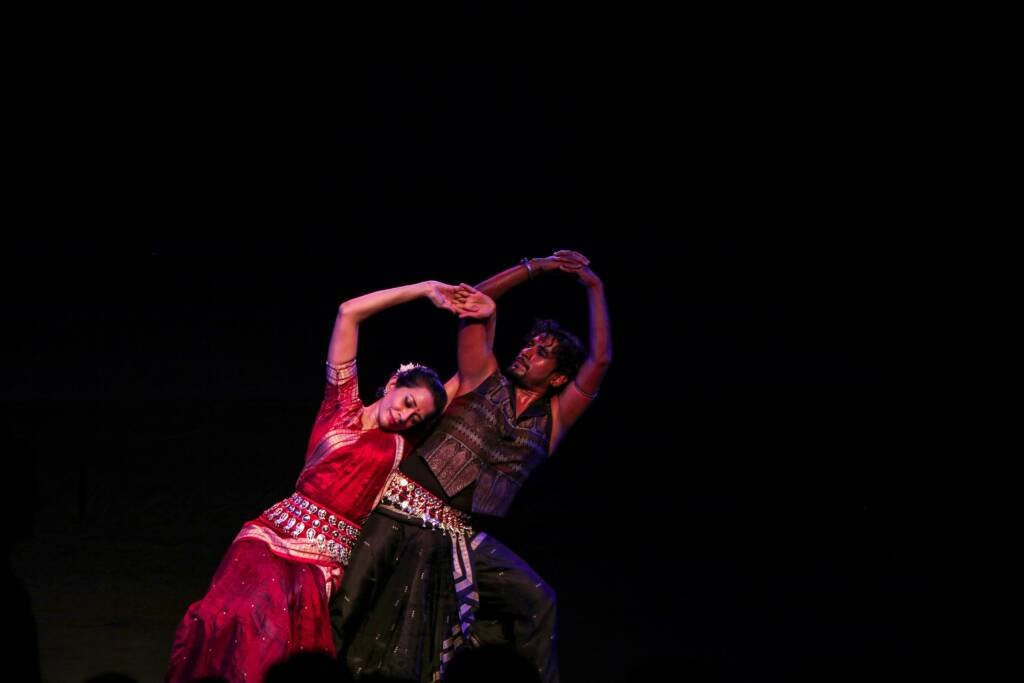
Long before the modern West theorized emotional intelligence, Bharat had already woven its essence into Natyashastra — the ancient treatise on dramaturgy by sage Bharata. Far from being mere entertainment, Natya was envisioned as a mirror to life, a yajna for the heart. Through the play of characters and emotions (rasa), the soul of the spectator was stirred, healed, and elevated.
In today’s language, Natya was — and remains — a potent tool for developing emotional intelligence, long before the term was coined.
In enacting the joy of Hasya (laughter), the courage of Veera, the sorrow of Karuna, or the disgust of Bibhatsa, children step into shoes not their own. They learn to feel what others feel. They give form to their own inner chaos. They learn empathy, expression, and emotional regulation — the very skills that no textbook can teach, but every life demands.

Theatre as a Sacred Pedagogy for Today’s Schools
The NEP 2020’s vision of holistic, value-based, and experiential learning reclaims this very ethos — urging us to reimagine classrooms as living, breathing spaces of exploration. Drama and role-play are not extracurricular luxuries; they are essential curricula for the heart.
In an age plagued by screen addiction, rising adolescent anxiety, and fractured attention spans, drama becomes a sanctuary. Here, children learn to pause, observe, express, and listen — not just to others, but to themselves. They discover that vulnerability is not weakness but wisdom. That behind every emotion lies a story, and every story holds a lesson.
Through empathy-based activities — scripted or spontaneous, individual or collaborative — children cultivate:
-
Self-awareness: Naming their emotions, understanding their triggers, embracing their uniqueness.
-
Social intelligence: Navigating group dynamics, respecting diversity, listening deeply.
-
Resilience: Rehearsing difficult emotions in safe spaces, bouncing back from failure, finding strength in expression.
-
Moral imagination: Exploring ethical dilemmas, practicing kindness, and standing in solidarity with others.
From Performers to Seekers: The Deeper Purpose of Role-Play
Every child who dons a role steps momentarily out of their ego and into a world of deeper truths. When a child plays Abhimanyu, they learn courage in the face of overwhelming odds. When they portray Sita, they glimpse the grace of dignity amidst injustice. When they become a bird, a river, or even the villain — they awaken dimensions of compassion, ecological awareness, and moral reflection that no lecture can invoke.
Such is the sacred power of role-play — it does not ask children to perform; it invites them to transform.
Cultivating the Inner Curriculum
The outer curriculum may teach a child to solve equations, but it is the inner curriculum that teaches them to solve themselves. Theatre builds that curriculum, brick by emotional brick. It invites joy, sorrow, confusion, laughter, fear, and wonder to sit in the same classroom — not as intrusions, but as gurus.
As educators and parents, we must ask ourselves: Are we raising emotionally literate human beings or just efficient exam-takers? Are our classrooms nurturing the whole child — mind, heart, and soul?
A Call to the Nation-Builders
Let us not forget that the greatest leaders — from Swami Vivekananda to Netaji Subhash Chandra Bose — were not just intellectually brilliant but emotionally awakened. They could feel the pulse of a nation because they had once listened to the pulse of their own hearts.
If we are to raise a generation that can heal the planet, bridge divides, and create meaningful lives — we must begin by teaching them to feel.
Drama and theatre, rooted in our ancient shastras and reborn in the light of experiential learning, are not just tools — they are sadhanas. When woven thoughtfully into education, they hold the potential to revive the emotional, ethical, and spiritual fabric of our future citizens.
The Stage as a Sacred Space
Let every classroom be a stage. Let every emotion be a teacher. Let every child become not just a learner — but a rasa-jna, one who tastes life fully and consciously.
For in the end, education is not about producing more minds — it is about nurturing luminous hearts.
And in the theatre of life, it is the emotionally intelligent who become not just the actors, but the authors of a more compassionate world.
Let us return to the wisdom of our ancestors and the vision of our future — by placing drama and empathy at the heart of our educational renaissance.